









A healthy vaginal microbiome, dominated by beneficial lactobacilli, helps maintain an acidic environment that can inhibit the persistence of HPV and reduce the risk of cervical abnormalities. Conversely, dysbiosis(an imbalance in the vaginal flora) may create conditions that favor viral persistence and progression.
A meta-analysis concluded that bacterial vaginosis (BV), a common type of vaginal microecological imbalance, is significantly associated with an increased risk of HPV infection (pooled OR=1.57, 95%CI: 1.24~1.99, P<0.001) and also significantly associated with an elevated risk of cervical intraepithelial neoplasia (CIN) (pooled OR=1.56, 95%CI: 1.23~1.98, P<0.001). Vulvovaginal candidiasis (VVC) is negatively correlated with HPV infection (pooled OR=0.63, 95%CI: 0.48~0.83, P=0.001), suggesting that VVC may have a potential protective effect against HPV infection.[1]
This is where a deeper understanding of vaginal health becomes a meaningful part of a proactive wellness strategy.
Our Vaginal Microecology Evaluation System, including Automate Stainer, Microscope Scanner and Vaginal Microecology Analysis Software, provides detailed, standardized analysis of the vaginal microenvironment. The system generates comprehensive reports that assess:
● Flora diversity and density
● Dominant bacteria
● Nugent score
● AV score
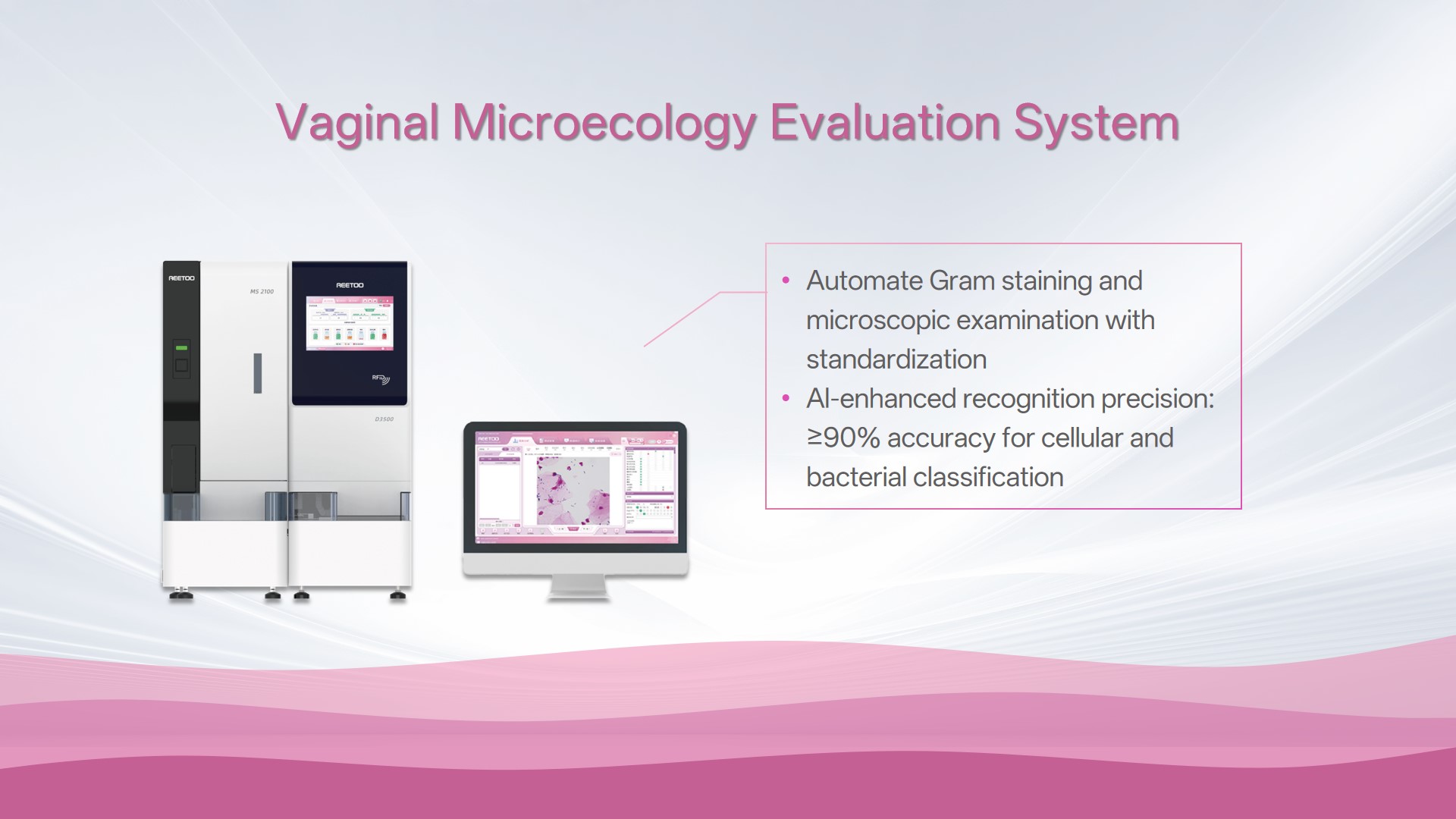
These indicators allow healthcare providers to evaluate not only vaginal infections but also the overall vaginal microecological balance, which is increasingly regarded as relevant to long-term cervical health maintenance.
While cervical cancer screening (such as HPV and Pap tests) remains the cornerstone of prevention, evaluating the vaginal microecology can offer additional context for patient care, especially for those with recurrent imbalances or persistent HPV.
Supporting a balanced vaginal ecosystem represents one more layer of proactive health stewardship, one that complements rather than replaces standard cervical screening guidelines.
[1] Liang, Y., Chen, M., Qin, L. et al. A meta-analysis of the relationship between vaginal microecology, human papillomavirus infection and cervical intraepithelial neoplasia. Infect Agents Cancer 14, 29 (2019).

 粤公网安备44030002003406